
Starting a few months into the pandemic, I set myself a practice: to draw or paint a bird every day for a year. During that time, I also started training to be a hospital or hospice chaplain. Deep down, I knew that the attention that attended each drawing and painting related to my desire to enter into contemplative care. The connections have become clearer to me over time and will always, I hope, be in process.
“Birds of Praise” documents something of that journey. The title comes from the term the Irish poet, peace activist and theologian Pádraig Ó Tuama coined for the “Amen” at the end of a prayer.
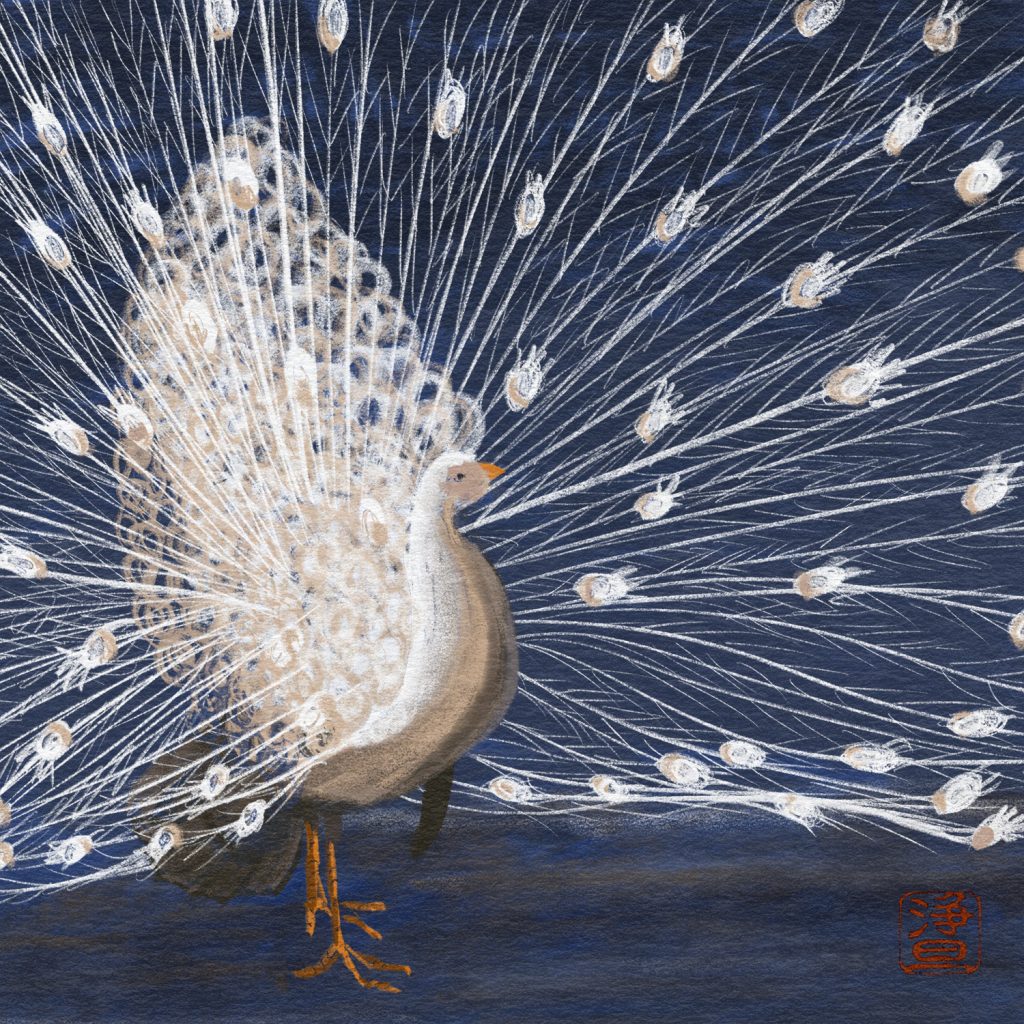 I started drawing or painting a bird a day on November 13, 2020 … and so today marks the 365th bird. I didn’t start out to do this for a year, but around the 60th or 70th bird, it seemed like a good idea. I’ve turned to peacocks to mark landmarks in this journey before, so it seemed appropriate to choose a white peacock for this final day. The white peacock is rare but not an albino. Unlike in albinos, its eyes, beak and feet are pigmented. A genetic mutation called leucism causes the feathers, yellowish at birth, to turn pure white with age. In parts of India, they symbolize unconditional love, which seemed a good note on which to end this year of birds, which is perhaps more accurately deemed a year of falling in love with birds…
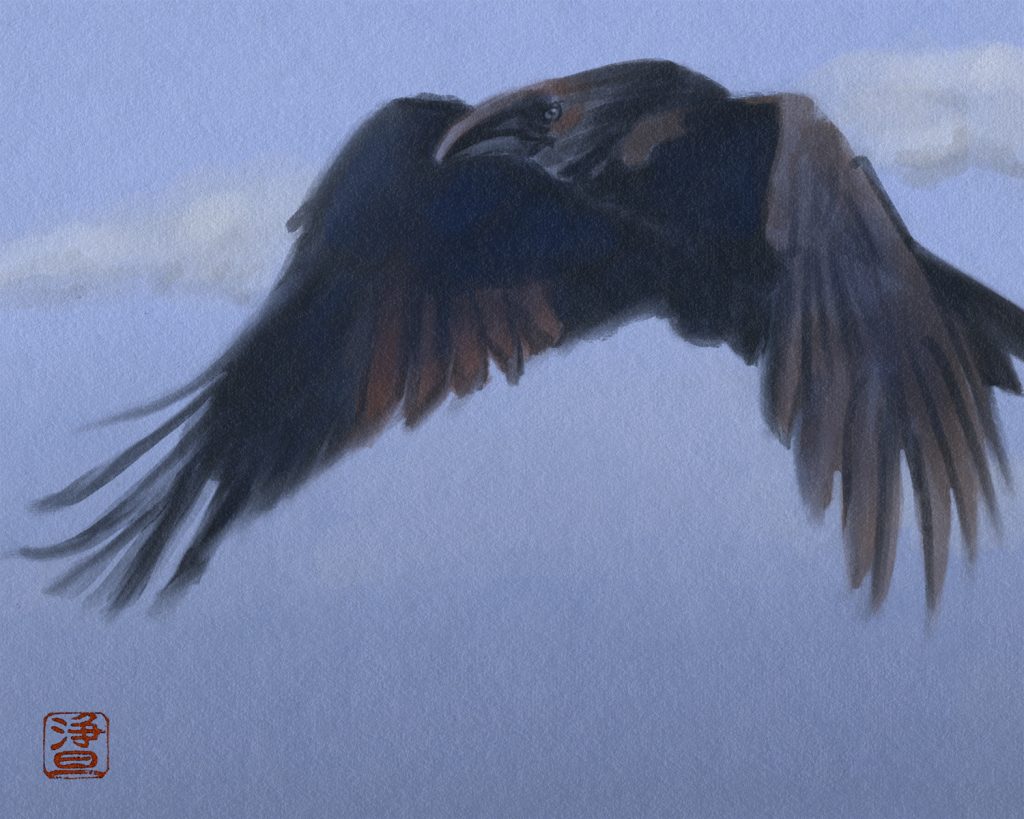 Spirit bird, trickster, jokester, and, for us with our small orchard of pioneer pecan trees, a willing harvester…I love these birds!
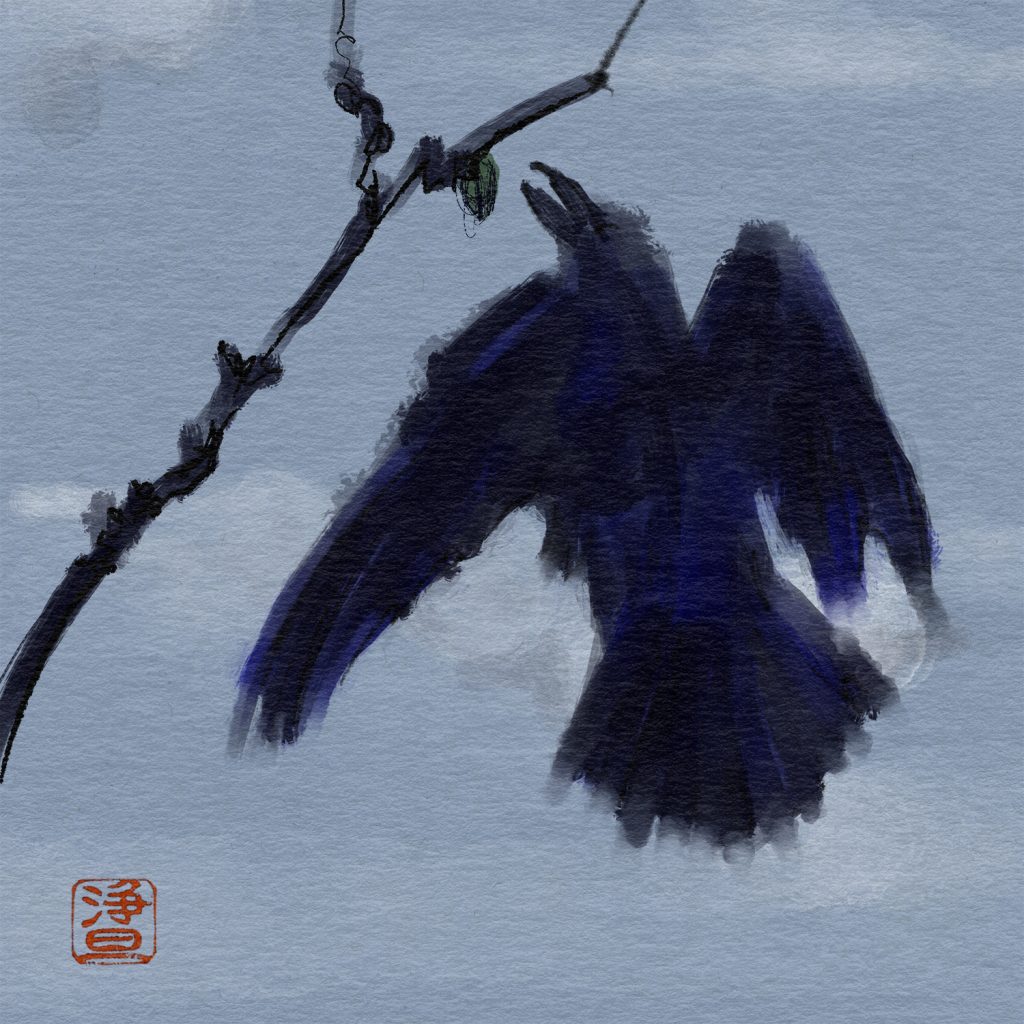 Almost exactly a year ago I started drawing the ravens in our big pecan trees. As the trees turn, the pecans are getting good, and the ravens are happy …
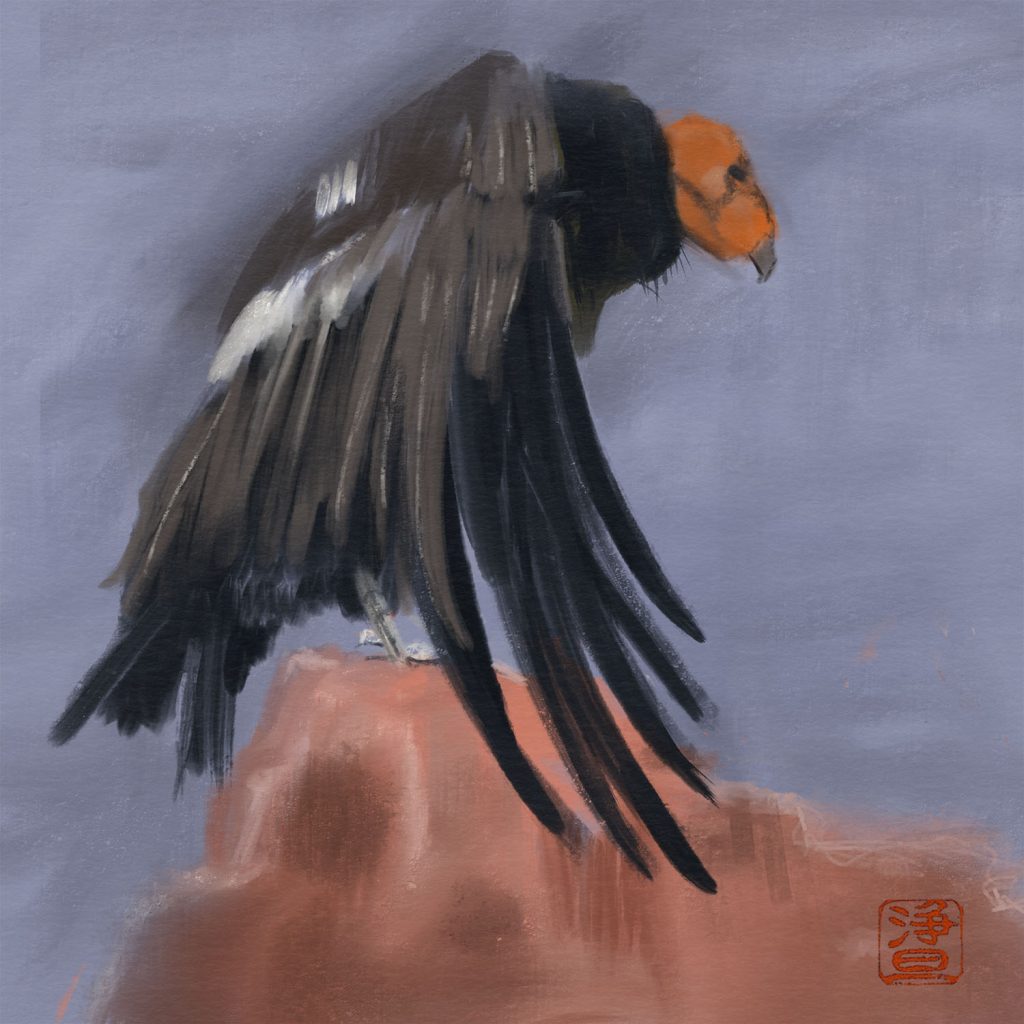 We almost lost the California condor, the largest bird in North America. By 1982, there were only 22 left in the entire world. A captive breeding program and then careful reintroduction to the wild have restored their population to over 400, a portion of which live in northern Arizona and southern Utah, and are often seen a few miles from my home near Lava Point and Angels Landing in Zion Naitonal Park. They are stunning in flight but a bit spooky when perched. Like their cousins, the turkey vulture,they feed on carrion, a great service in cleaning up road kill and other carnage. Both are in the family Cathartidae, which comes from the Greek word for “purifier.”
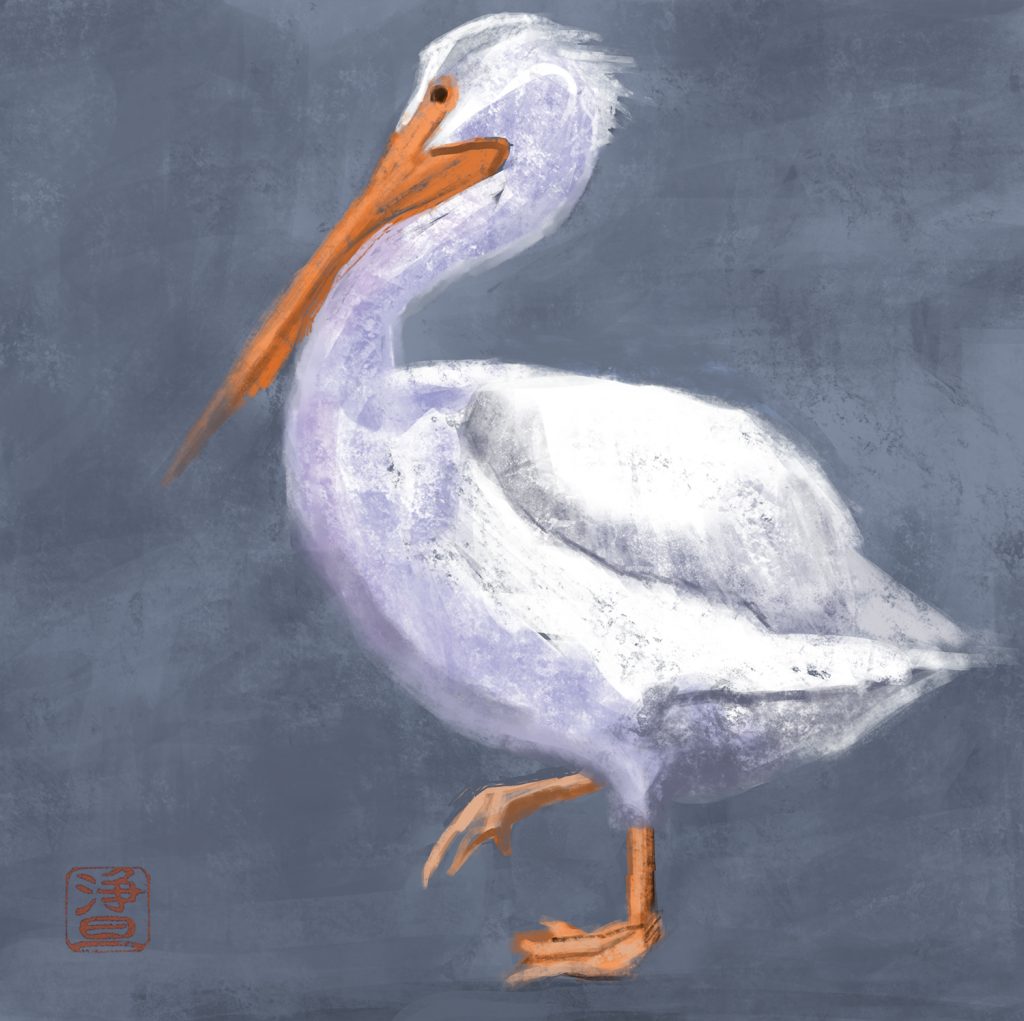 After yesterday’s lazuli bunting, which could fit in the palm of your hand, the American white pelican is one of the largest flying birds in the world–second in North America only to the California Condor. An adult female can weigh up to 30 pounds, as compared to a bald eagle, which seldom tops 12 pounds (really, they are that lightweight.) Pelicans look so awkward, especially when they are walking, but they can soar!
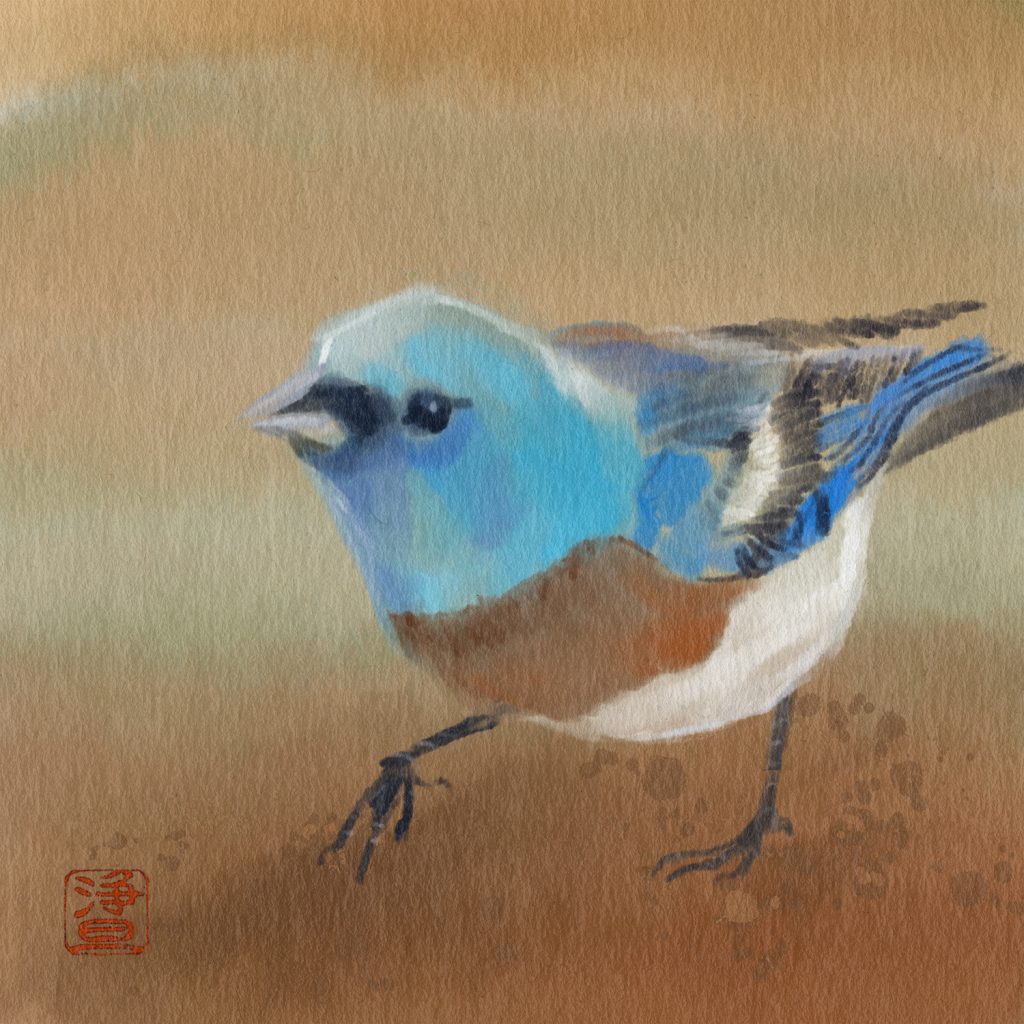 I’ve never seen a lazuli bunting in the wild, even though they breed in southern Utah, where I live. They are such little jewels of birds — their scientific name, Passerina amoena, means beautiful sparrow. This drawing is based on a photograph by the Oregon wildlife photographer Terry Steele.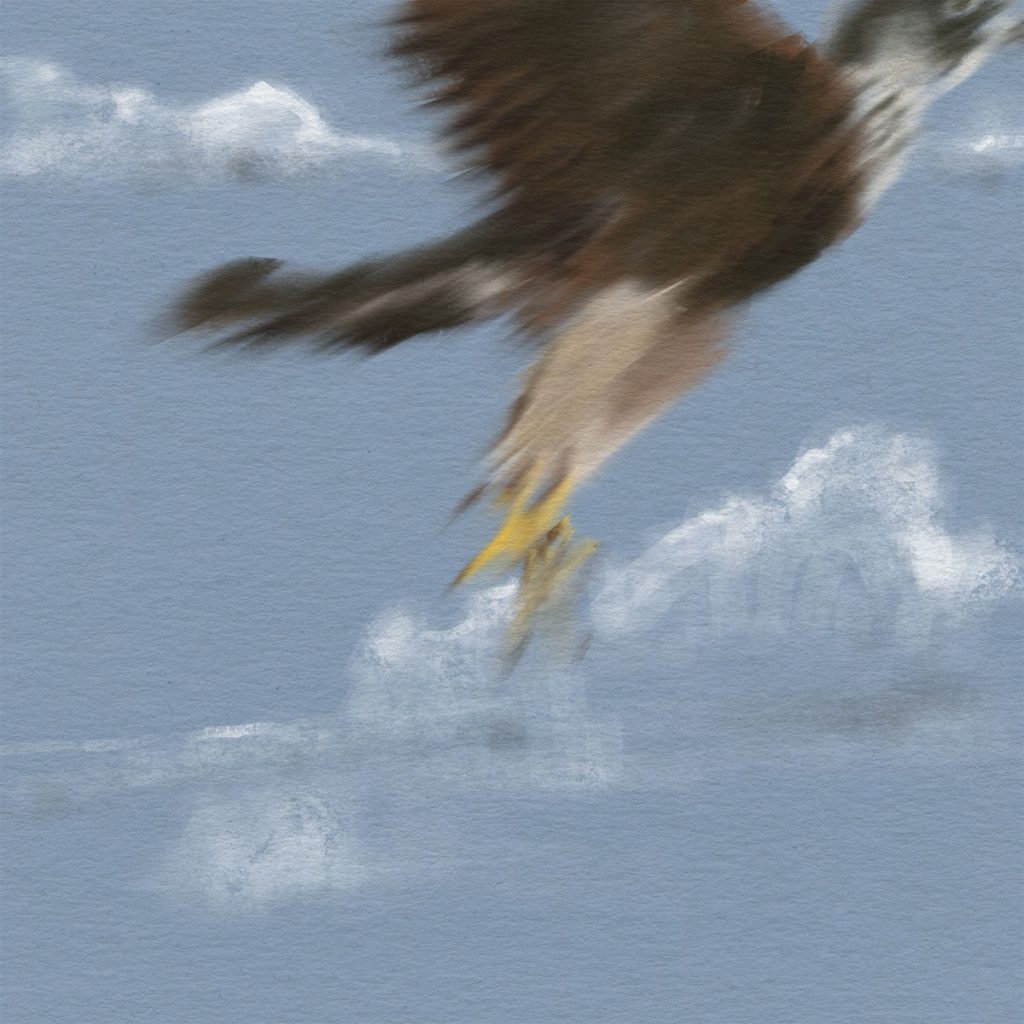
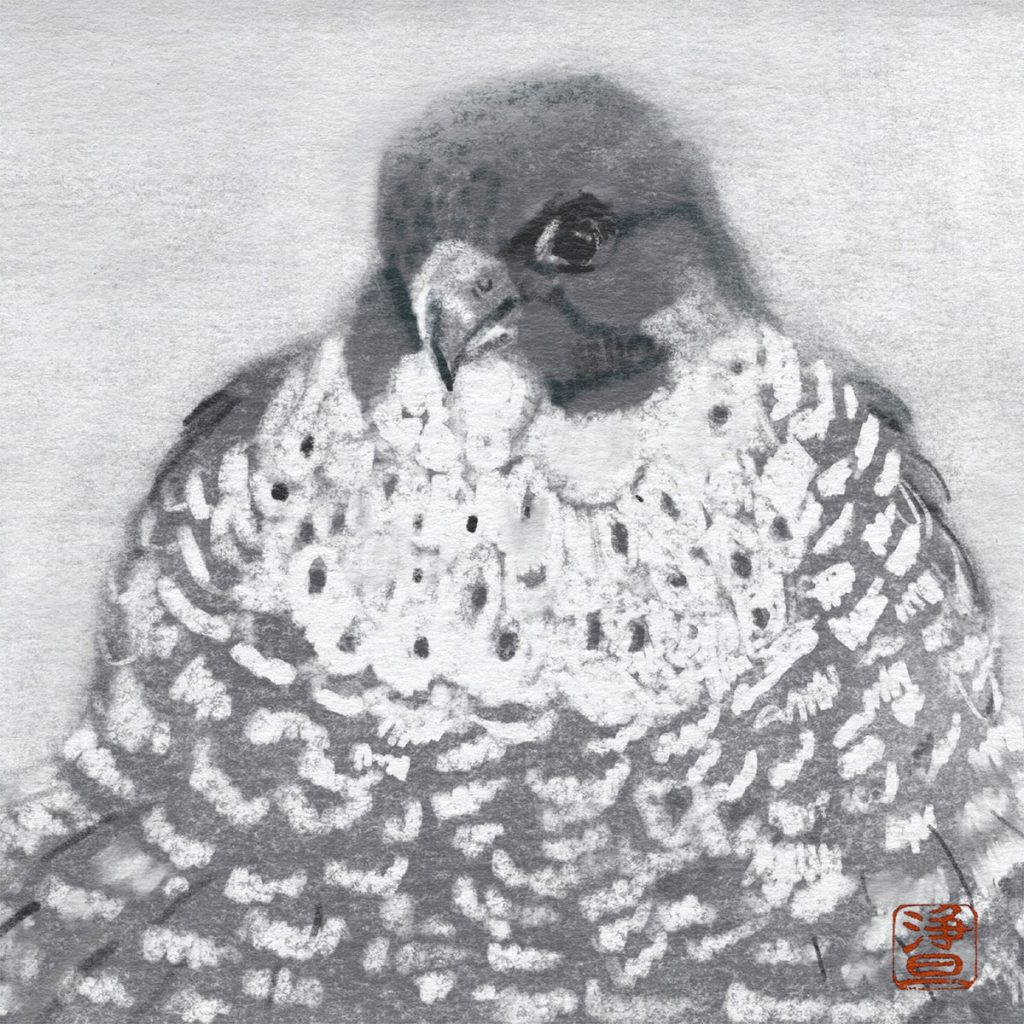 Another peregrine. Historically, falcons were given to visiting dignitaries or from one royal to another, perhaps because the are so royal themselves.
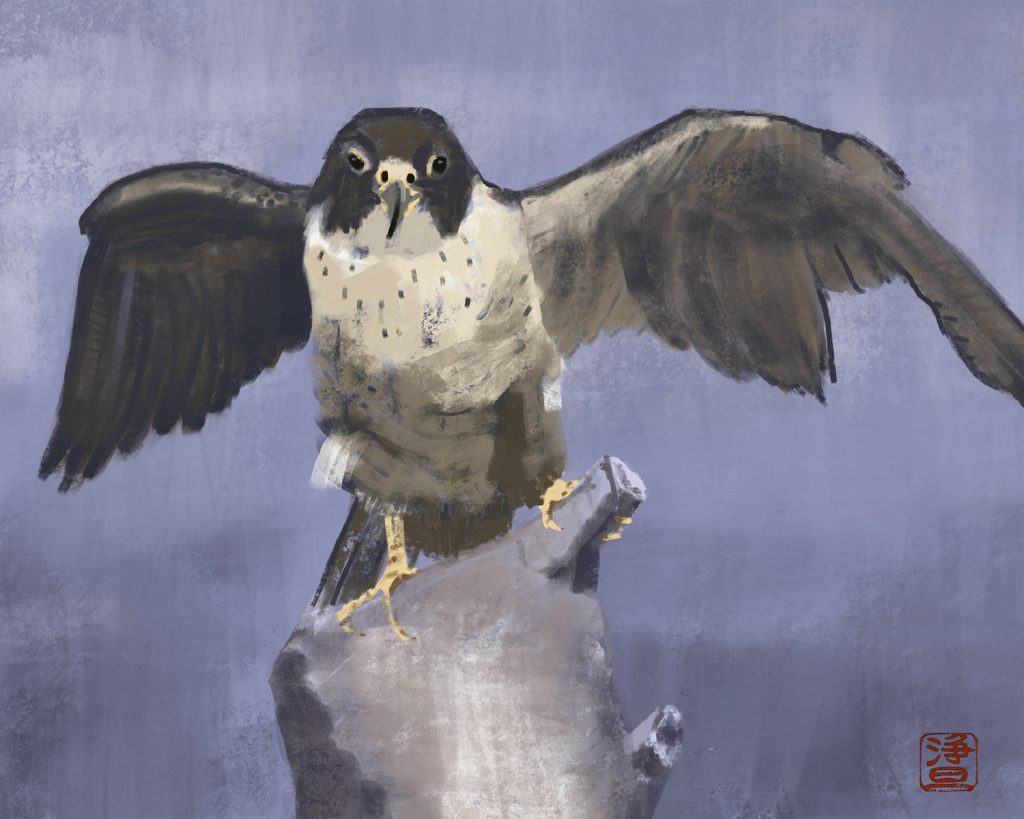 Every time I focus on a bird I thought was familiar, I learn the most amazing new things — like the fact that the peregrine falcon is the fastest creature on earth, reaching speeds of over 200 mph in its dives.